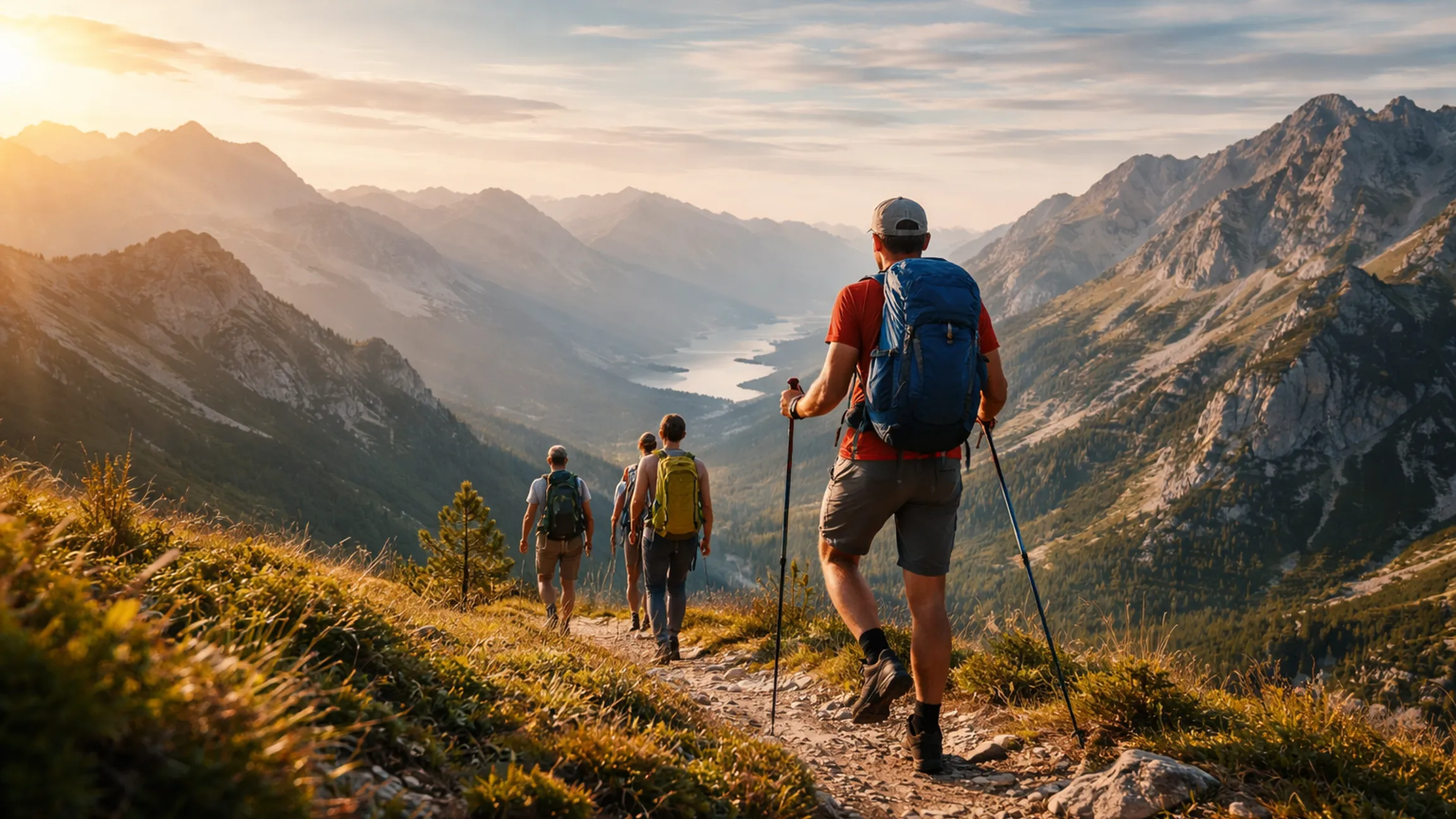
Hiking is the most popular sport in Germany. According to a Statista survey from 2024, around 38.67 million people in Germany go hiking at least occasionally - in the ranking of the most popular sporting activities in 2023, hiking came in first place with around 11.2% of people doing it more often, ahead of going to the gym and jogging.
What was long considered a leisurely pastime has long since developed into a serious endurance sport - with a growing competition scene, professional events and a new extreme trend: ultrahiking.
What is hiking - and where does the sport begin?
The German Hiking Association defines hiking as "a leisure activity with varying degrees of physical exertion that promotes both mental and physical well-being". It is characterized by a duration of more than one hour, appropriate planning, the use of specific infrastructure and suitable equipment.
In practice, the spectrum ranges from relaxed forest trails to long-distance routes lasting several days with thousands of metres of altitude. A distinction is made between mountain hiking, long-distance hiking (also known as trekking or long-distance hiking), sports hiking, popular hiking, winter hiking and educational hiking.
The physical effects should not be underestimated: Hiking burns between 350 and 500 kilocalories per hour. The more meters of altitude covered, the higher the calorie consumption. For intensive mountain tours, it can be significantly more. Added to this are the well-documented effects on the cardiovascular system, muscles, immune system and mental health - hiking promotes muscle development, strengthens bones and joints and is a good cardiovascular workout that is particularly suitable for people for whom other sports such as jogging or mountain biking are not an option.
Why do people hike - and what has changed?
According to the Hiking Monitor, the main motives are "to experience nature" (96%), "to exercise, to be active" (88%), "to do something for your health" (72%) and "to experience a region" (71%).
The shift in motives over time is interesting: compared to 2015, experiencing nature and health have become more important. Stress relief and inward-looking motives such as "finding oneself" have also increased, while sociability and social aspects have decreased slightly.
Younger hikers use the sport in particular as a counterbalance to their digital working day. More than one in three respondents set off on a hiking tour several times a month, almost one in five even once a week.
The most popular form of tour remains the day hike, which 89 percent of those surveyed prefer - usually with 10 to 15 kilometers and 500 to 900 meters of altitude.
However, much longer distances are also becoming increasingly popular, which are referred to as ultrahiking.
What is ultrahiking?
Ultrahiking is the increase in distance and intensity of classic hiking. Ultrahiking, also known as long-distance hiking, is the term used to describe hiking over exceptionally long distances - usually over 50 kilometers or even several hundred kilometers. In contrast to conventional hiking, it is not just about covering the distance, but also about overcoming challenging terrain, extreme weather conditions and your own physical and mental limits.
The term is therefore clearly distinct from trail running: You walk, not run. That sounds easier at first - but anyone who has covered 80 or 100 kilometers in one go knows that appearances are deceptive. These distances put the body under strain in a different, sometimes more treacherous way than running: Blisters, joint wear and tear, sleep deprivation and mental exhaustion are the typical companions.
For a long time, hiking was considered boring or was decried as something for "old people". But more and more runners are taking a liking to ultra-marches. Obstacle runs, marathons, trail runs or ultra runs were considered the measure of all things for years - hardly anyone thought about extreme hikes. This has changed fundamentally. There are now entire series of ultra-marches that are professionally staged.
The Mammutmarsch: Paving the way for a movement
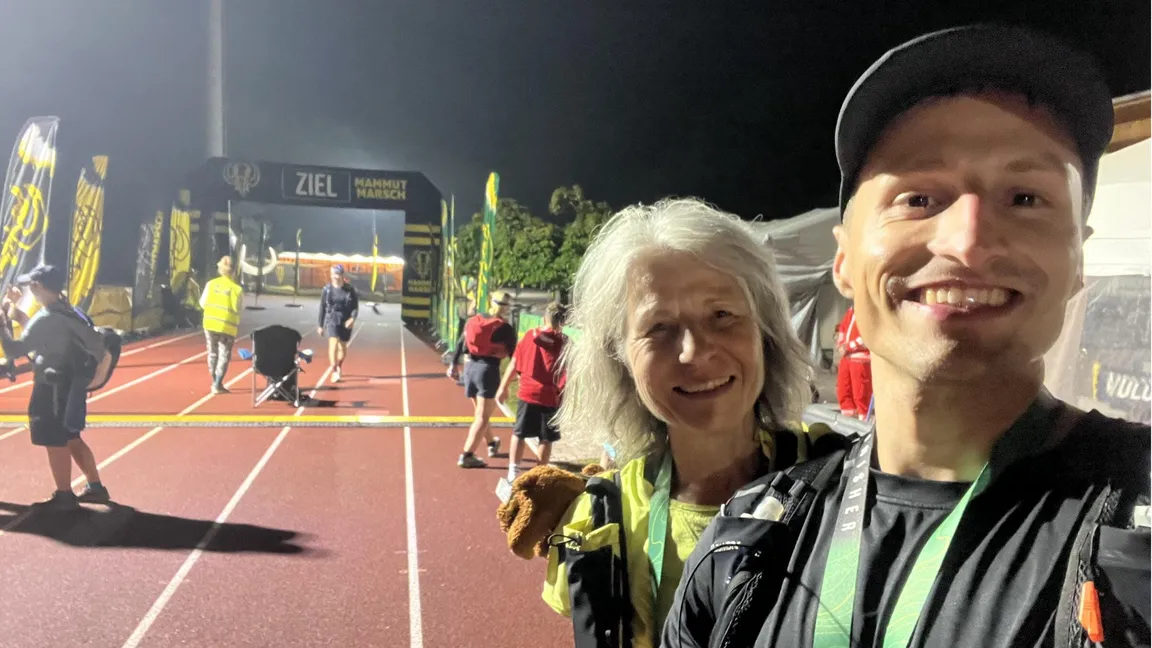
No other event has shaped the ultra-hiking boom in Germany more than the Mammutmarsch. In 2006, founders Philipp and Bastian set off on their own to hike 100 kilometers. Blisters, pain, curses and tears - even then, everything was like today. They reached the 100-kilometer mark in exactly 24 hours. This private experiment turned into a major event with tens of thousands of participants every year.
Today, the Mammutmarsch offers distances of 30, 42, 55 and 100 kilometers, spread across numerous locations in Germany and Europe - from Berlin to Munich, Vienna, Spain and Norway. Last year, more than 12,000 participants took part in the Mammutmarsch in Duisburg alone.
The concept thrives on the mix: the routes lead through scenic or culturally significant areas. Route posts are positioned at prominent locations such as the Zollverein Coal Mine Industrial Complex UNESCO World Heritage Site or the Tetrahedron on the Beckstraße slag heap. Refreshments, GPS route guidance, paramedics and a full-blown community - the so-called "mammoth herd" - make the march an experience that goes far beyond mere kilometers.
The herd is a colorful mix: young people, old people, families with children and many people who hike together with their dogs. The Mammoth March is not a competition - there are no ranking times. Whoever finishes wins.
Other well-known ultrahiking events
A lively event landscape has developed alongside the Mammut March. The Megamarsch offers similar formats with 50 kilometers in 12 hours and 100 kilometers in 24 hours, spread over 18 cities and regions. The Ultramarsch Schwarzwald sends participants on 50 or 100 kilometers over the ZweiTälerSteig with up to 3,400 meters of altitude. The Horizontale "Rund um Jena" - one of the oldest events of its kind - has been taking place for over 35 years and includes a 100-kilometre long-distance hike. The Ultramarsch Usedom combines cliffs and imperial baths to create an unusual lowland route.
Internationally, the Jordan Trail (650 km), the Te Araroa in New Zealand (3,000 km) or the Pacific Crest Trail in the USA (4.265 km) are among the best-known ultra-hiking routes - multi-day to multi-month undertakings that have become a sub-genre of the sport in their own right.
Equipment and preparation
Hiking is basically low-threshold - the entry hurdle is minimal. Nevertheless, equipment is the difference between success and failure, especially over long distances.
Most important basic equipment for day and multi-day tours:
Shoes: well-worn, waterproof, with ankle support - the most important single factor
Clothing: layering principle, weatherproof outer layer, change of underwear
Navigation: GPS device or smartphone with offline maps (e.g. komoot, AllTrails)
Refreshments: sufficient water (at least 2-3 liters), energy and carbohydrate-rich snacks
Hiking poles: take a lot of strain off your knees and back, especially when descending and over long distances
Mandatory equipment is also required for ultra-hiking events: emergency kit, safety vest, headlamp and cell phone are mandatory at most events.
Ultrahiking requires careful preparation: solid basic fitness, strength training for legs and core, training in different terrain and weather and adapting your diet with sufficient carbohydrates, proteins and healthy fats.
Taking hiking seriously as a sport
Hiking is often not yet seen as a real sport. After taking part in a mammoth march, such discussions usually become superfluous.
This gets to the heart of the matter. Anyone who has ever hiked 55 kilometers with a heavy backpack through varying terrain - at night, in the rain, with numb toes in the third pair of socks - no longer doubts that hiking requires physical and mental strength. The apparent simplicity of the form of exercise is deceptive: endurance, nutritional strategy, mental robustness and careful preparation make the difference between finishing and giving up.
Hiking is sport. It always has been. The rest have just stopped underestimating it.
Hiking-Clubs
Show allFind sports clubs of the sport Hiking in your area, become a member and organize yourself in your club.

Hiking-News and Article
Show allDiscover exciting news and blog articles of the sport Hiking.