
Basics
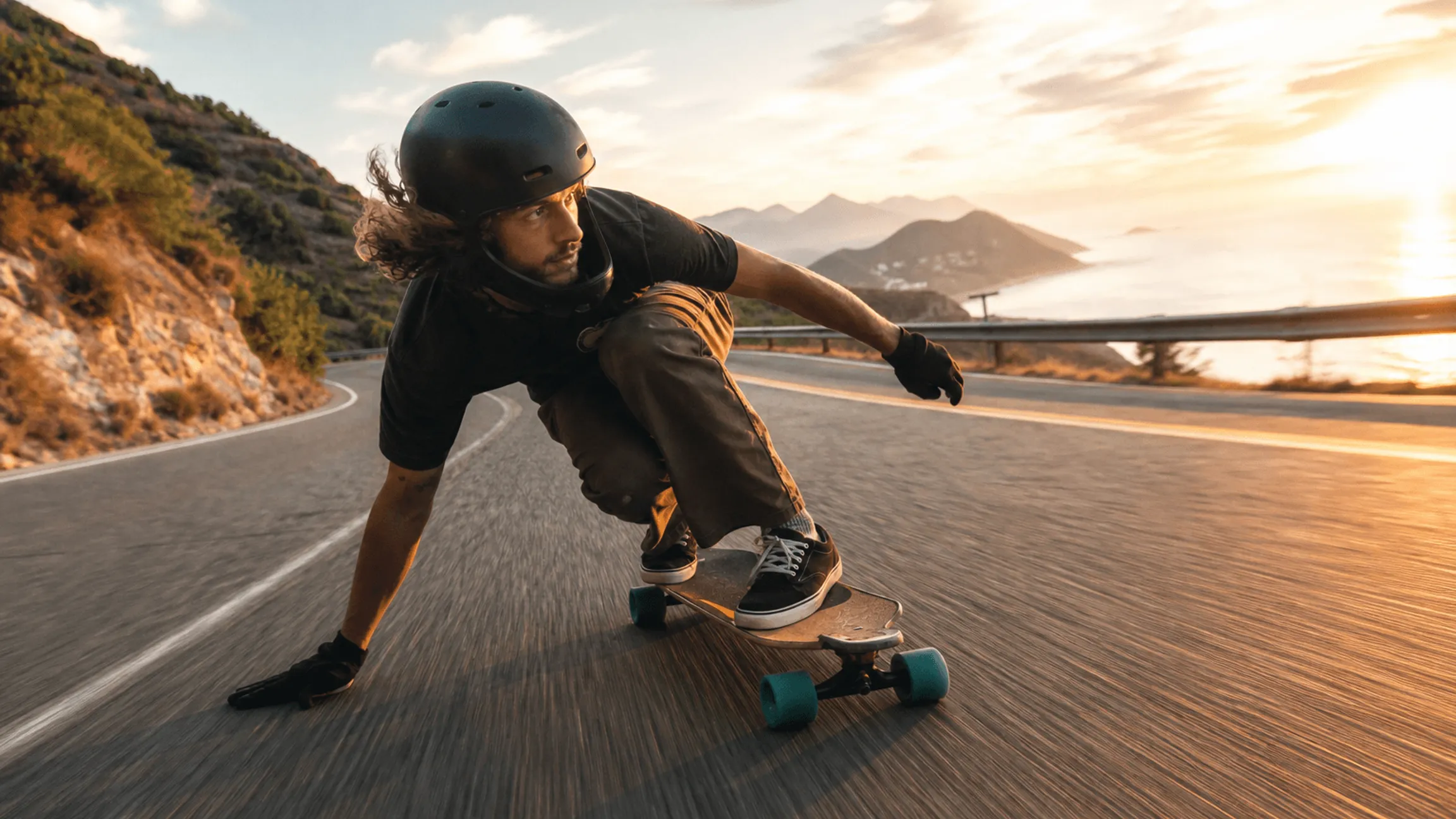
Longboarding is basically riding a longboard, which looks like a longer skateboard. Unlike skateboarding, however, there are several types of longboarding, which differ mainly in riding style. The best-known styles are:
Cruising: A laid-back style of longboarding that involves riding leisurely through the city or along the beach.
Carving: This involves riding through the streets in long, sweeping turns.
Downhill: This is all about high speeds, steep hills, and pure adrenaline.
Equipment
A longboard consists of a deck, trucks, wheels, and bearings. Most longboards are made of wood or fiberglass to ensure stability and flexibility. The trucks are usually made of aluminum or another lightweight alloy and can vary in width depending on riding style and preferences. The wheels are larger and softer than those on skateboards to make riding on uneven surfaces easier. There are also special wheels for downhill riding that are harder and provide better control. The bearings are made of metal or ceramic and ensure that the wheels spin smoothly.
Techniques
Longboarding requires some specific techniques to ride safely and effectively. Here are some of the basic techniques:
Stance: Your stance on the longboard is important for maintaining balance and control. Your feet should be about shoulder-width apart and aligned parallel to the deck’s longitudinal axis.
Pushing: To move forward, you push off the longboard with one foot while keeping the other foot on the deck.
Carving: This involves steering the longboard through sharp turns by shifting your body weight.
Braking: In longboarding, there are various methods for braking, such as carving, the foot brake, or the slide brake.
Benefits
Longboarding isn’t just fun—it also offers several health benefits. It promotes physical fitness, particularly endurance, coordination, and balance. It’s also a great way to relieve stress and unwind from everyday life. Furthermore, longboarding is a fantastic way to explore the city or the great outdoors and discover new places.